
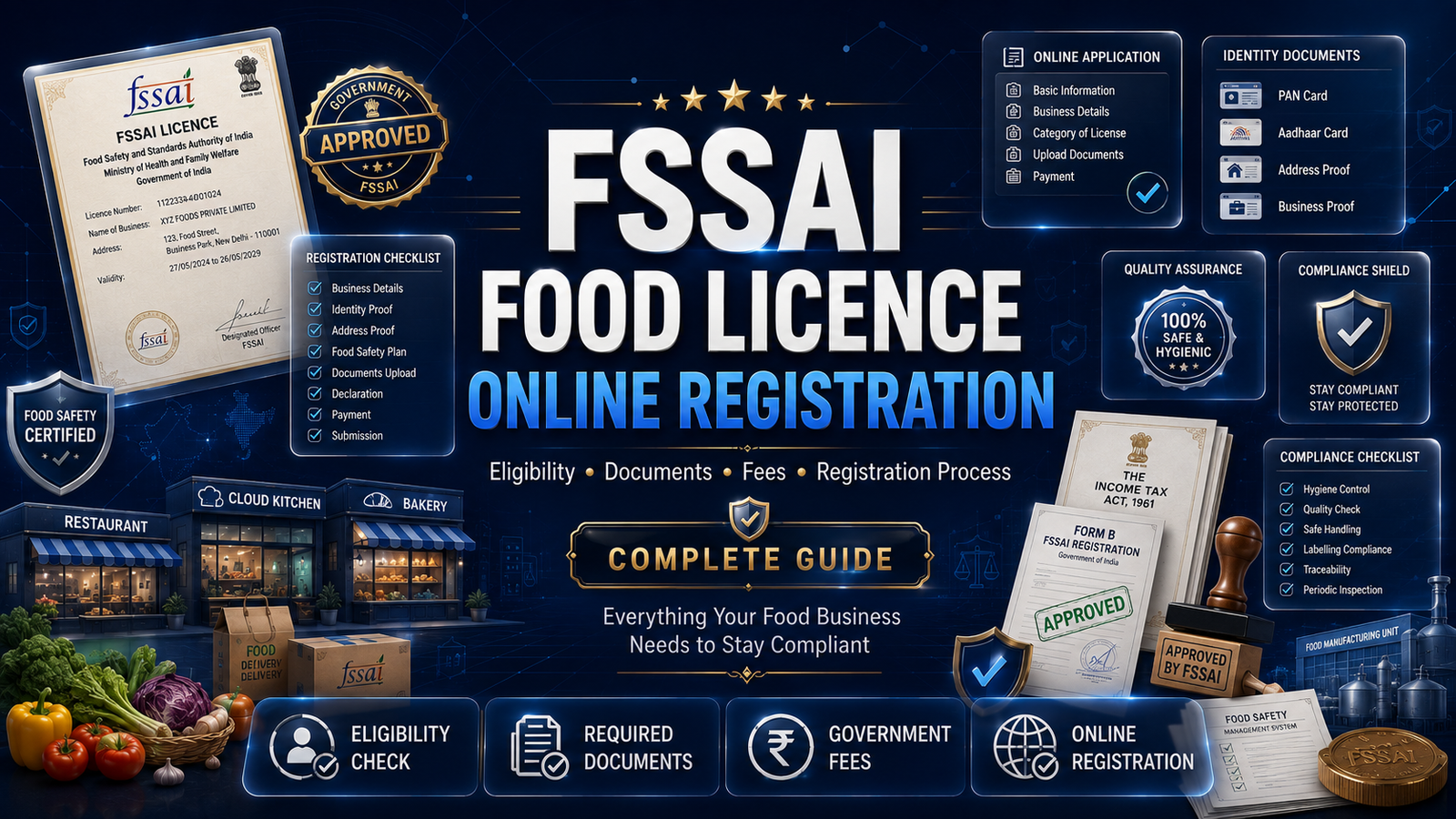
Starting a food business in Chennai, India involves more than just offering quality products or excellent service-it also requires compliance with the legal standards established by the Food Safety and Standards Authority of India (FSSAI). Whether you operate a home-based food business, restaurant, cloud kitchen, bakery, catering service, food manufacturing unit, online food brand, or retail outlet, obtaining an FSSAI Registration or FSSAI Licence is a mandatory legal requirement before commencing operations. Reflecting the government’s continued focus on simplifying compliance, the Ministry of Health & Family Welfare updated the FSSAI Licensing Regulations in June 2026 to make food business registration easier and more efficient.
An FSSAI Licence not only ensures compliance with food safety regulations but also builds customer trust, enhances business credibility, and enables businesses to expand through online marketplaces, retail partnerships, and government tenders. Choosing the correct type of licence, preparing the necessary FSSAI Documents Required, understanding the applicable fees, and completing the Food Licence Registration process correctly can help businesses avoid application rejections, penalties, and unnecessary delays.
This comprehensive guide explains everything you need to know about obtaining an FSSAI registration or an FSSAI online Licence in Chennai, India, including eligibility criteria, licence categories, required documents, government fees, the registration process, and important compliance requirements for 2026.
Key Takeaways
- FSSAI registration or an FSSAI Licence is mandatory for most food businesses in India, with the applicable licence determined by the nature of the business, annual turnover, and operational scale.
- Choosing the correct Food Licence Registration category and submitting all FSSAI Documents Required accurately helps prevent application rejections, processing delays, and regulatory non-compliance.
- Understanding the eligibility criteria, government fees, licence validity, and the step-by-step online registration process enables businesses to obtain their FSSAI approval quickly and efficiently.
- Maintaining complete business records, responding promptly to authority queries, and renewing the licence before its expiry ensures uninterrupted operations and continued compliance with FSSAI regulations.
- Regularly reviewing the latest FSSAI guidelines, notifications, and food safety requirements helps businesses stay compliant, build customer trust, and operate confidently in India’s regulated food industry.
What Is FSSAI Registration and Why Is an FSSAI Licence Important?
FSSAI registration is a mandatory approval issued by the Food Safety and Standards Authority of India (FSSAI) for businesses involved in the manufacture, processing, storage, distribution, transportation, or sale of food products. Depending on the size and nature of the business, food business operators (FBOs) are required to obtain either an FSSAI registration or an FSSAI Licence to operate legally in India.
The primary purpose of registration is to ensure that food businesses comply with the safety, hygiene, and quality standards prescribed under the Food Safety and Standards Act, 2006. It also enables regulatory authorities to monitor food businesses and protect consumers by ensuring that safe and hygienic food reaches the market.
Importance of FSSAI Licence
- Ensures legal compliance with the Food Safety and Standards Act, 2006.
- Builds customer trust by demonstrating adherence to food safety standards.
- Enhances business credibility and strengthens brand reputation.
- Facilitates partnerships with online food delivery platforms, retailers, and distributors.
- Supports business expansion across different states and markets.
- Reduces the risk of penalties, legal action, and business interruptions due to non-compliance.
- Promotes better food safety practices and quality assurance throughout business operations.
Eligibility Criteria, Types of FSSAI Licence, and Food Licence Registration
The type of FSSAI registration or FSSAI required Licence depends on your business’s annual turnover, operational scale, and the nature of food-related activities. Choosing the correct category is essential for smooth Food Licence Registration and compliance with the Food Safety and Standards Act. The table below provides a quick overview of the eligibility criteria and the appropriate licence for different types of food businesses.
FSSAI Licence Eligibility and Registration Categories
| Licence Type | Eligibility Criteria | Annual Turnover | Suitable For |
| Basic FSSAI Registration | Small food businesses with limited operations | Up to ₹12 lakh | Home-based food businesses, petty food manufacturers, street food vendors, small retailers, temporary food stalls |
| State FSSAI Licence | Medium-sized food businesses operating within a state | Above ₹12 lakh and up to ₹20 crore | Restaurants, cafés, bakeries, cloud kitchens, hotels, food manufacturers, caterers, distributors, storage units |
| Central FSSAI Licence | Large businesses or those involved in interstate or specified activities | Above ₹20 crore or as prescribed by FSSAI | Large manufacturers, importers, exporters, e-commerce food operators, airports, seaports, railway catering, central government establishments |
Note: Certain businesses, such as food importers, exporters, and operators involved in interstate trade, may require a Central FSSAI Licence regardless of their annual turnover. Applicants should always refer to the latest FSSAI guidelines before applying for Food Licence Registration.
FSSAI Documents Required, Registration Fees, and Licence Validity
Before applying for FSSAI Registration, it is important to gather the required documents and understand the applicable government fees. Submitting complete and accurate documentation helps speed up the verification process and reduces the chances of application rejection. The fees and validity of an FSSAI Licence vary depending on the type of licence, business turnover, and the duration selected by the applicant.
FSSAI Documents Required
- PAN Card of the proprietor or business entity
- Aadhaar Card or other valid identity proof
- Address proof of the business premises
- Passport-size photograph of the applicant
- Business registration proof (Partnership Deed, LLP Agreement, or Certificate of Incorporation, if applicable)
- Rent Agreement or ownership proof of the business premises
- List of food products or business activities
- Food Safety Management System (FSMS) plan, where applicable
- Water testing report from a recognized laboratory (for specific food businesses)
- NOC or additional approvals, if required for the business category
FSSAI Registration Fees
The government fee depends on the type of registration or licence and the nature of the food business.
| Licence Type | Government Fee (Approx.) | Validity |
| Basic FSSAI Registration | ₹100 per year | 1–5 years |
| State FSSAI Licence | ₹2,000–₹5,000 per year* | 1–5 years |
| Central FSSAI Licence | ₹7,500 per year | 1–5 years |
Choosing a longer validity period can reduce the frequency of renewals and help businesses maintain uninterrupted compliance. Before submitting the application, ensure all FSSAI Documents needed for accurate and up to date to facilitate a smooth Food Licence Registration process.
How to Apply for FSSAI Registration Online: Step-by-Step Process
Applying for FSSAI registration online is a straightforward process when you choose the correct licence category and keep the required documents ready. Following the right steps can help you complete your Food Licence Registration quickly while avoiding unnecessary delays or application rejections.
Step 1: Determine the Appropriate FSSAI Licence
Identify whether your business requires Basic Registration, a State Licence, or a Central Licence based on its annual turnover, business activities, and operational scale.
Step 2: Keep the Required Documents Ready
Gather all FSSAI-required documents, including identity proof, address proof, business registration documents, photographs, and any other applicable supporting documents.
Step 3: Submit the Online Application
Visit the official FSSAI licensing portal, choose the appropriate licence category, and complete the application form with accurate business and applicant details.
Step 4: Upload Supporting Documents
Upload clear and valid copies of all required documents in the prescribed format to support your application.
Step 5: Pay the Registration Fee
Pay the applicable government fee based on the type and validity period of your Licence using the available online payment methods.
Step 6: Application Verification
The licensing authority reviews your application and documents. If additional information is required, you will receive a notification through the portal.
Step 7: Download Your FSSAI Licence
After successful verification, your FSSAI Registration or FSSAI licence is issued electronically. Download the licence certificate from the portal and display it at your business premises as per FSSAI regulations.
Common FSSAI Registration Mistakes and Best Practices for Quick Approval
Obtaining an FSSAI Registration or FSSAI licence is an important step for every food business, but simple mistakes during the application process can lead to delays, additional document requests, or even rejection. Taking the time to prepare your application correctly can help ensure a faster approval process and uninterrupted business operations.
Mistakes to Avoid During Food Licence Registration
| Common Mistake | Impact on Your Application |
| Applying under the wrong licence category | May result in rejection or reapplication. |
| Submitting incomplete or incorrect documents | Delays verification and approval. |
| Entering incorrect business or owner details | Can lead to application discrepancies. |
| Uploading unclear or invalid documents | May trigger additional document requests. |
| Ignoring authority queries or notices | Increases processing time or may lead to rejection. |
| Delaying licence renewal | Can affect business continuity and compliance. |
Effective Best Practices for Faster Approval
A few proactive steps can significantly improve your chances of obtaining your FSSAI Licence without delays:
- Choose the correct licence category based on your turnover and business activities.
- Keep all FSSAI Documents Required complete, updated, and ready before applying.
- Verify every detail in the application form before submission.
- Ensure supporting documents are clear, valid, and match the information provided.
- Regularly track your application status and respond promptly to any requests from the licensing authority.
- Seek professional assistance if you need guidance on Food Licence Registration or compliance requirements.
Submitting a complete and accurate application not only speeds up approval but also helps businesses maintain compliance with FSSAI regulations. Proper preparation today can save valuable time, reduce administrative hurdles, and allow you to focus on growing your food business with confidence.
Final Thoughts
Obtaining an FSSAI registration or FSSAI licence is more than a legal requirement-it is a crucial step toward building a safe, compliant, and trustworthy food business in Chennai, India. Choosing the correct Food Licence Registration category, preparing the necessary FSSAI-required documents, and completing the online registration process accurately can help businesses avoid delays, penalties, and operational disruptions.
Whether you are starting a home-based food business, opening a restaurant, launching a cloud kitchen, or expanding a food manufacturing unit, complying with FSSAI regulations strengthens customer confidence and supports long-term business growth. Staying updated with the latest FSSAI guidelines and seeking professional assistance when needed can make the registration process smooth and ensure your business remains fully compliant.
Frequently Asked Questions
FSSAI Registration is generally meant for small food businesses with limited turnover, while an FSSAI Licence is required for medium and large businesses based on their annual turnover and operational activities. Choosing the correct category ensures compliance with the Food Safety and Standards Act and helps avoid application rejection.
Any Food Business Operator (FBO) involved in manufacturing, processing, storing, transporting, distributing, or selling food products must obtain either FSSAI Registration or an FSSAI Licence. This includes restaurants, cloud kitchens, bakeries, home-based food businesses, caterers, retailers, food manufacturers, importers, and exporters.
The FSSAI Documents Required typically include identity proof, address proof, PAN Card, business registration documents, proof of business premises, photographs, and details of food products or business activities. Some businesses may also need an FSMS plan, water testing report, or additional approvals depending on the licence category.
You can complete Food Licence Registration online by selecting the appropriate licence category, filling out the application form, uploading the required documents, paying the applicable government fee, and submitting the application through the official FSSAI licensing portal. Once verified, the licence is issued electronically.
The government fee depends on the type of FSSAI Licence and the selected validity period. Basic Registration generally costs ₹100 per year, while State and Central Licences have higher prescribed fees. Applicants can usually choose a validity period ranging from one to five years.
Operating without the required FSSAI Registration or FSSAI Licence may result in penalties, legal action, suspension of business activities, or prosecution under the Food Safety and Standards Act, 2006. Obtaining the appropriate licence helps businesses operate legally and build customer confidence.
Businesses can speed up their Food Licence Registration by selecting the correct licence category, submitting all FSSAI Documents Required, providing accurate business information, and responding promptly to any queries from the licensing authority. Preparing documents in advance and seeking professional guidance can further improve the approval process and reduce the risk of rejection.