

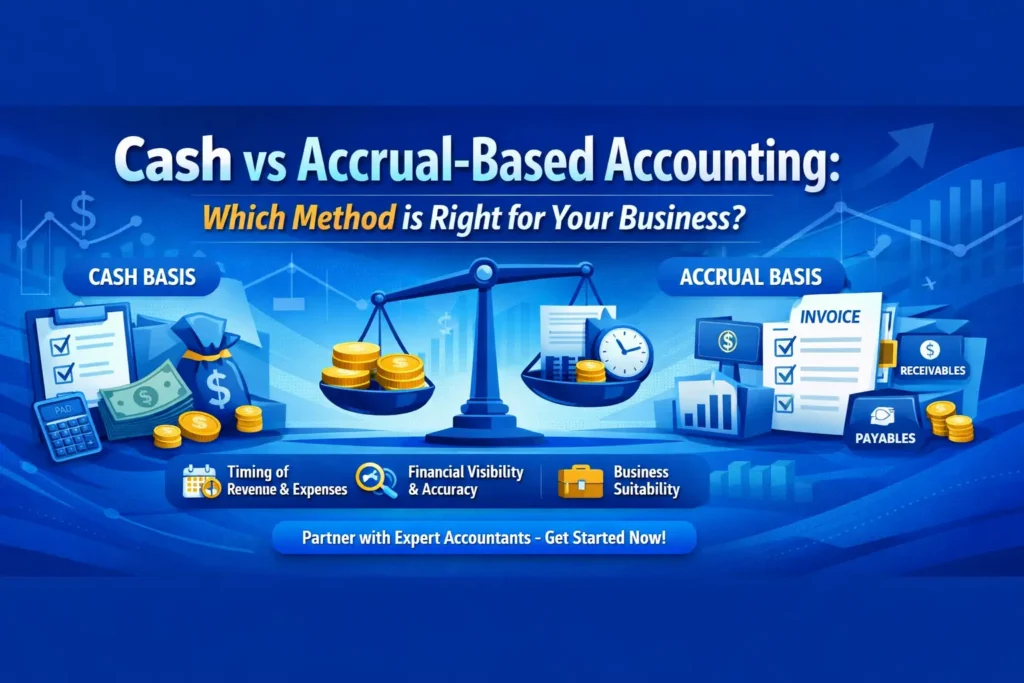
Deciding whether to use cash or accrual-based accounting can be a major decision that impacts your business. The difference between accrual and cash basis accounting lies in the timing of when revenue and expenses are recognized.
Let’s break down the concept of cash vs accrual-based accounting to choose which method is right for your business growth.
KEY INSIGHTS:
Before choosing between cash basis and accrual basis accounting, it is important to understand the key factors that differentiate them. Each method affects how a business records its financial transactions, manages cash flow, and reports its financial performance. The following key insights highlight the most important aspects businesses should consider when selecting the right accounting method.
“Take Control of Your Finances Today – Partner with Expert Accountants! Get Started Now”
MAIN 3 KEY INSIGHTS:
1. Timing of Revenue and Expenses
The primary difference between cash and accrual accounting is the timing of recording transactions. Cash accounting records income and expenses when money is received or paid, while accrual accounting records them when they are earned or incurred.
2. Financial Visibility and Accuracy
Cash basis accounting focuses on the actual cash flow of a business, making it simple to track available cash. In contrast, accrual accounting provides a more accurate view of a company’s financial performance by including receivables and payables.
3. Suitability for Different Business Sizes
Cash accounting is generally suitable for small businesses due to its simplicity, while accrual accounting is more appropriate for larger or growing businesses that require detailed financial reporting and better financial planning.
WHAT IS CASH BASIS ACCOUNTING?
This method of accounting revenue and expenses are recorded only when cash is actually received or paid.
WHAT IS ACCRUAL BASIS ACCOUNTING?
This method of accounting revenue and expenses are recorded when they earned or incurred, regardless of when cash is received or paid.
THE DIFFERENCE BETWEEN CASH vs ACCRUAL ACCOUNTING:
| Aspect | Cash Accounting | Accrual Accounting |
| Revenue Recognition | Revenue is recorded when the business actually receives payment from customers. | Revenue is recorded when the business earns it, even if the payment has not yet been received. |
| Expense Recognition | Expenses are recorded when the business pays cash. | Expenses are recorded when they are incurred, even if payment is made later. |
| Cash Flow Visibility | Cash basis accounting gives a clear picture of the actual cash available in the business. | Accrual accounting may not show the immediate cash position because transactions are recorded before cash is exchanged. |
| Financial Accuracy | Cash accounting may not show the full financial performance because some revenues or expenses may be delayed. | Accrual accounting provides a more accurate representation of a company’s financial health. |
| Complexity | Cash basis accounting is simple and easy to manage. | Accrual accounting is more complex and requires proper tracking of financial transactions. |
| Accounts Receivable | Cash basis accounting does not record accounts receivable (money owed by customers). | Accrual accounting records receivables when a sale is made on credit. |
| Accounts Payable | Cash accounting does not record accounts payable (money the business owes). | Accrual accounting records payables when expenses occur but payment is not yet made. |
| Business Suitability | Cash accounting is ideal for small businesses, freelancers, and startups. | Accrual accounting is commonly used by larger businesses or companies with complex transactions. |
| Financial Planning | Cash accounting provides limited insight for long-term planning. | Accrual accounting helps businesses plan budgets and analyze financial performance more effectively. |
| Compliance and Reporting | Cash accounting is usually used for simple internal financial tracking. | Accrual accounting is often required for formal financial reporting, audits, and regulatory compliance. |
“Streamline Your Business Accounting with Professional Support – Click Here to Get Started! “
WHICH METHOD IS BEST FOR YOUR BUSINESS:
Let’s break down the different type of business:-
- Sole proprietorship
- Partnership
- Corporation
SOLE PROPRIETORSHIP:
A sole proprietorship is a business owned and managed by one individual. These businesses usually have fewer transactions and simpler financial operations. Because of this, many sole proprietors prefer cash basis accounting. This method allows them to record income when they receive cash and record expenses when they make payments, making it easier to track daily cash flow.
For example: A freelance graphic designer or a small retail shop owner may use cash accounting to monitor their income and expenses without dealing with complex accounting records.
PARTNERSHIP:
A partnership is a business owned by two or more individuals who share profits, responsibilities, and liabilities. Small partnerships often choose cash basis accounting because it is simple and easy to manage. However, as the partnership grows and begins to deal with credit sales or unpaid bills, accrual accounting may become more suitable. Accrual accounting helps partners understand their financial position by recording revenue when it is earned and expenses when they are incurred.
For example: A small consulting partnership might start with cash accounting but switch to accrual accounting as their client base expands.
CORPORATION:
A corporation is a separate legal entity owned by shareholders and usually operates on a larger scale. Corporations often have complex transactions, multiple stakeholders, and strict financial reporting requirements. Because of this, accrual basis accounting is typically used. Accrual accounting provides a more accurate picture of the company’s financial performance by recording revenues and expenses when they occur, not just when cash is exchanged.
For example, a manufacturing company that sells products on credit would use accrual accounting to record sales immediately even if payment is received later.
CONCLUSION:
Choosing between cash basis and accrual basis accounting depends on the size, complexity, and financial needs of a business. Cash basis accounting is simple and focuses on actual cash flow, making it suitable for small businesses such as sole proprietorships or small partnerships. On the other hand, accrual basis accounting records transactions when they occur, providing a more accurate view of financial performance, which is often necessary for larger businesses like corporations and growing companies.
Ultimately, businesses should select the accounting method that best supports their financial reporting, decision-making, and long-term growth.
FAQS FOR CASH BASIS & ACCRUAL BASIS ACCOUNTING:
Freelancer / consultant: Cash
Small service business: Cash
Retail / inventory business: Accrual
Growing company: Accrual
Seeking investors: Accrual
Yes. Banks, lenders, and investors usually prefer accrual accounting because it provides:
· More detailed financial statements
· Better performance analysis
Yes, but it may require:
· Approval from tax authorities
· Adjustments to financial records
It’s best to choose the correct method early.
Accrual accounting provides a more accurate view.
· Matches revenue with related expenses
· Shows outstanding receivables and payables
· Helps understand real profitability
Cash basis may allow more flexibility because:
· Income is taxed when cash is received
· Expenses are deductible when paid
Some businesses delay income or accelerate expenses for tax purposes.
