
Starting an import or export business in Chennai, India requires more than finding international buyers or suppliers. Businesses must also comply with the documentation and regulatory requirements governing cross-border trade. One of the most important requirements for eligible importers and exporters is obtaining an IEC Code through the Directorate General of Foreign Trade (DGFT).
India’s exports hit a record US $863.1 billion in FY 2025–26, highlighting the scale of the opportunity for businesses entering international trade. An IEC Registration is generally required for businesses undertaking import or export activities, subject to applicable exemptions. Whether you are a manufacturer, trader, online seller, merchant exporter, or service provider involved in international transactions, understanding the IEC requirements before applying can help prevent documentation errors and unnecessary delays.
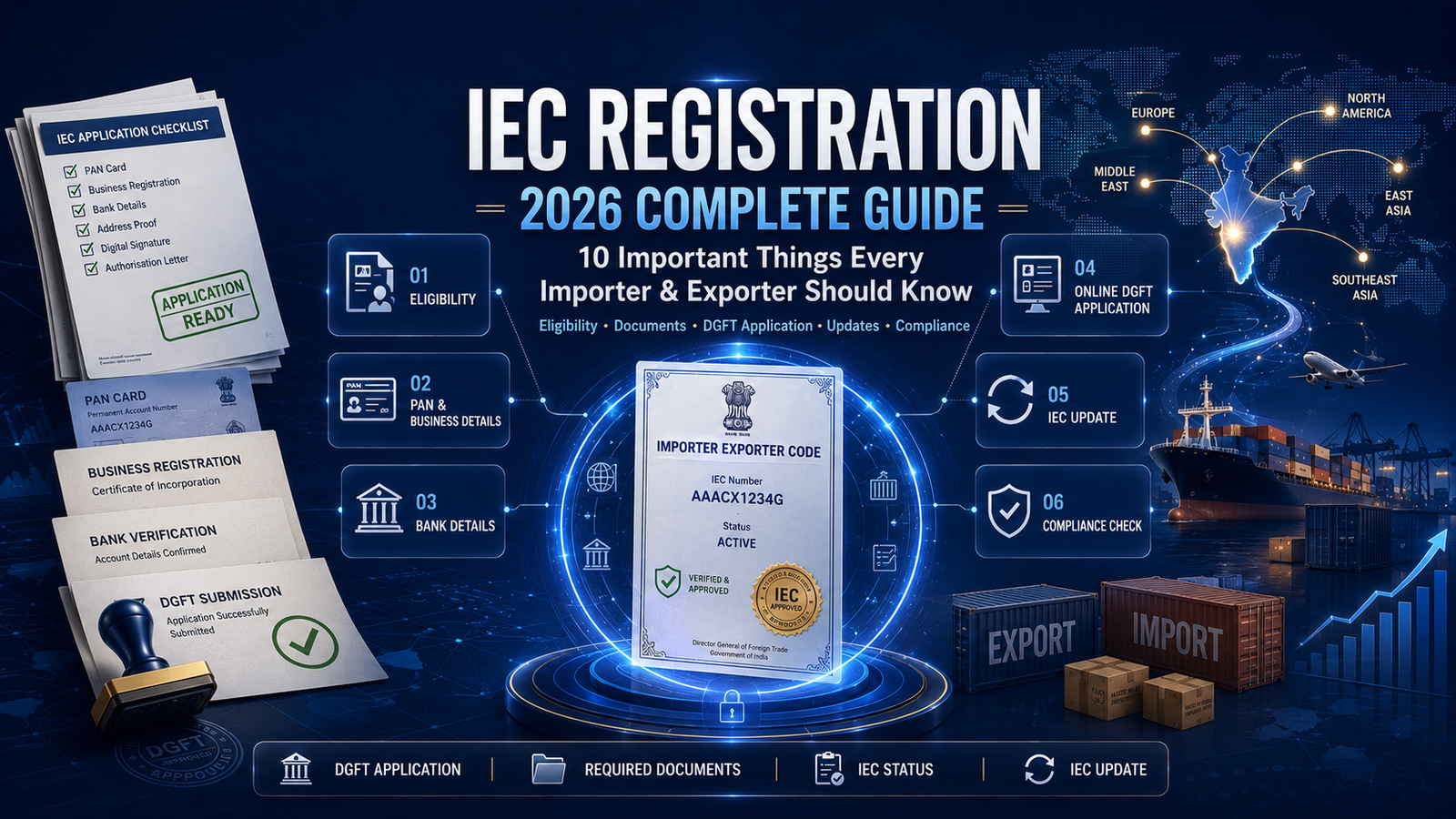
From checking eligibility and preparing documents to submitting an IEC Application and keeping your details updated, every step matters. This guide explains 10 important things every new importer and exporter should know about IEC Registration in 2026, along with the application process, common mistakes, compliance requirements, and when an IEC Update may be necessary.
Key Takeaways
- IEC Registration is generally required for businesses and individuals undertaking eligible import or export activities in India, subject to specific exemptions under applicable DGFT rules.
- Understanding the purpose of an IEC Code, eligibility requirements, and current DGFT guidelines helps new importers and exporters avoid compliance errors before starting international trade.
- Preparing accurate business, PAN, address, and bank details before submitting the IEC Application can reduce verification issues, processing delays, and the risk of application errors.
- Keeping your IEC information accurate and completing an IEC Update whenever prescribed changes occur helps maintain proper regulatory records and supports smoother import-export transactions.
- Regularly checking DGFT notifications, Foreign Trade Policy updates, and applicable import-export requirements helps businesses keep their IEC Code compliant and respond to regulatory changes effectively.
What Is an Importer-Exporter Code (IEC)?
An IEC Code, or Importer-Exporter Code, is a unique identification number issued by the Directorate General of Foreign Trade (DGFT) to businesses and persons engaged in eligible import or export activities. It serves as a key identification number for carrying out international trade from India and is generally required when importing goods into India or exporting goods from India, subject to applicable exemptions.
Businesses involved in cross-border trade typically need to obtain an IEC before undertaking transactions for which the code is mandatory. The IEC helps establish the identity of the importer or exporter and supports compliance with India’s foreign trade requirements.
Who Needs Importer-Exporter Code (IEC) Registration in 2026?
In 2026, businesses and persons intending to undertake activities that require an Importer-Exporter Code (IEC) generally need to obtain IEC registration through the DGFT. This may include manufacturers, traders, importers, exporters, proprietorships, partnerships, LLPs, companies, and other eligible entities involved in applicable import or export transactions. The DGFT’s 2026 IEC application guidelines state that those intending to import or export are required to apply, subject to applicable rules and exemptions.
An IEC should be obtained before starting import or export activities where it is mandatory. However, certain transactions may be exempt from the IEC requirement under applicable regulations, so businesses should verify whether an exemption applies to their specific activity.
“Ready to start importing or exporting? – Get expert support for IEC Registration and complete your DGFT application from CAAFT”
Top 10 Important Things to Know Before Applying for IEC Registration
1. IEC Is Generally Required for Import and Export Activities
An IEC is an important compliance requirement for most businesses importing or exporting goods from India. Before beginning international trade, businesses should determine whether their transaction requires an IEC or qualifies for an applicable exemption.
2. Your PAN and Business Details Must Match
The information provided in the IEC Application should be accurate and consistent with the applicant’s PAN and official business records. Differences in business names, entity details, or other information can result in verification issues or processing delays.
3. Keep the Required Information Ready Before Starting the Application
Applicants should prepare their business details, PAN information, address details, contact information, and bank account information before beginning the application. Having accurate information readily available makes the IEC Registration process more efficient.
4. IEC Application Is Submitted Online
The IEC application process is conducted online through the DGFT platform. Applicants need to register or log in, provide the required information, complete the prescribed verification and payment steps, and submit the application electronically.
5. Bank Account Details Are Important
Valid bank account information is an important part of the IEC application process. Applicants should ensure that the bank details provided are accurate and associated with the relevant business or applicant to avoid unnecessary verification issues.
6. IEC Does Not Automatically Provide Every Export Benefit
Obtaining an IEC allows an eligible business to meet the applicable identification requirement for import and export activities, but it does not automatically make the business eligible for every export incentive, licence, or government scheme. Additional conditions may apply depending on the product, transaction, and applicable policy.
7. IEC Details Must Remain Accurate
After receiving an IEC Code, businesses should ensure that their registered information remains accurate. Changes to business details, contact information, bank details, or other prescribed particulars may require action through the DGFT portal.
8. Know When an IEC Update Is Required
An IEC Update may be required when specific details associated with the importer or exporter change. Regularly reviewing the information associated with the IEC helps businesses maintain accurate records and reduce potential compliance issues.
9. Check Your IEC Status Before Starting Trade
Before undertaking an import or export transaction, businesses should verify that their IEC is active and that the registered information is correct. This simple check can help identify issues before they affect documentation or trade-related transactions.
10. Always Check the Latest DGFT Requirements
Import-export regulations can change through amendments, notifications, and updates to the Foreign Trade Policy or DGFT procedures. Businesses should verify the latest requirements before submitting an IEC Application or making changes to an existing IEC.
Importer-Exporter Code (IEC) Application Process
Obtaining an IEC Code is a largely online process through the Directorate General of Foreign Trade (DGFT). Before starting the IEC Application, applicants should verify their business details, PAN information, bank details, and applicable requirements to avoid errors or delays.
The IEC Registration process generally involves the following steps:
- Create an account on the DGFT portal using the required applicant details.
- Log in and select the IEC service from the available online services.
- Enter business and applicant details, including entity type, address, and contact information.
- Provide PAN and bank account details as required.
- Complete the prescribed verification or authentication process.
- Pay the applicable government fee through the available online payment facility.
- Submit the completed IEC Application and track its status online.
- Download the IEC Code after successful processing and issuance.
Documents Required for Importer-Exporter Code (IEC) Registration
| Document | Requirement |
| PAN Card | PAN of the applicant or business entity |
| Address Proof | Valid address proof of the business |
| Bank Details | Bank account details in the firm’s/entity’s name |
| Business Details | Details of the business constitution and applicant |
| Supporting Documents | Additional documents, if applicable, based on the business structure |
Common Importer-Exporter Code (IEC) Registration Mistakes to Avoid Before Applying
Many IEC-related delays can be prevented by checking the application carefully before submission. Incorrect information, inconsistent business records, incomplete details, or outdated information can create avoidable complications.
| Common Mistake | Potential Issue |
| Entering incorrect PAN or business details | May create verification discrepancies |
| Providing incorrect bank information | Can affect application verification |
| Submitting incomplete information | May delay processing |
| Using outdated business details | Can create compliance issues later |
| Failing to update changed information | May result in inaccurate Importer-Exporter Code (IEC) records |
| Not checking current DGFT requirements | Can lead to an incomplete application |
| Assuming Importer-Exporter Code (IEC) covers every trade approval | Additional licences or permissions may still apply |
How to Avoid Importer-Exporter Code (IEC) Application Errors
Before submitting an IEC Application, verify that the business information matches official records, bank details are accurate, and all required information has been provided. After issuance, periodically review the IEC details and complete an IEC Update whenever applicable changes occur.
Final Thoughts
An IEC Code is an important compliance requirement for eligible businesses involved in India’s import and export ecosystem. However, obtaining IEC Registration should not be treated as a one-time formality. Businesses need to understand their eligibility, provide accurate information, follow the correct IEC Application process, and keep their details updated after issuance.
For new importers and exporters, preparing the required information in advance and checking the latest DGFT requirements can significantly reduce avoidable errors and delays. Maintaining accurate IEC records and completing an IEC Update whenever required also helps businesses remain prepared for international trade and changing regulatory requirements.
Frequently Asked Questions
An IEC Code, or Importer Exporter Code, is a unique identification number issued through DGFT for eligible importers and exporters. It is generally required for importing or exporting goods from India, subject to applicable exemptions. Businesses should obtain it before undertaking transactions for which IEC is mandatory.
Businesses and persons undertaking eligible import or export activities generally need IEC Registration. Manufacturers, traders, exporters, importers, proprietorships, partnerships, LLPs, companies, and other eligible entities may require an IEC depending on the nature of their transactions and applicable exemptions.
An IEC Application can be submitted online through the DGFT platform. Applicants generally need to provide business, PAN, contact, and bank-related information, complete verification, pay the applicable fee, and submit the application. Accurate information helps reduce the possibility of processing delays.
The information required can depend on the applicant’s business structure and current DGFT requirements. Generally, applicants need PAN details, business constitution information, address and contact details, and valid bank account information. Checking the latest DGFT requirements before applying is recommended.
An IEC does not operate like a conventional annual licence renewal. However, IEC holders may have periodic confirmation or updating requirements under DGFT rules. Businesses should monitor official DGFT requirements and ensure their IEC information remains accurate and current.
An IEC Update may be required when prescribed information associated with the importer or exporter changes. This can include business, address, contact, bank, or other relevant details. Keeping the IEC information updated helps businesses maintain accurate regulatory records.
In many cases, an IEC Code is required for import and export activities, but specific exemptions may apply under the applicable Foreign Trade Policy and DGFT rules. Businesses should check whether their particular transaction qualifies for an exemption before proceeding without IEC Registration.