

Selling a property, shares, mutual funds, or other investments can generate significant profits, but it may also result in substantial Capital Gains Tax liability if the transaction is not planned properly. Many taxpayers focus on the sale price while overlooking the tax implications, only to realize later that poor planning has reduced their overall returns.
Whether you’re a property owner, investor, or business owner, understanding the difference between Short-Term Capital Gains Tax and Long-Term Capital Gains Tax is essential before completing any sale. The amount of tax payable depends on factors such as the type of asset, holding period, purchase cost, sale value, and available exemptions under the Income Tax Act. For property transactions, understanding the tax on property sale is equally important to avoid unexpected liabilities and make informed financial decisions.
With the right tax planning strategy, you can legally reduce your Capital Gains Tax, maximize post-tax returns, and remain fully compliant with Income Tax regulations. This guide explains how capital gains are taxed, common mistakes to avoid, and practical strategies to help you save tax before selling property or shares in FY 2026.
Key Takeaways
- Planning before selling property or investments can significantly reduce your Capital Gains Tax liability.
- Understanding the difference between Short-Term Capital Gains Tax and Long-Term Capital Gains Tax helps you choose the most tax-efficient time to sell.
- The tax on property sale depends on the asset type, holding period, exemptions, and reinvestment strategy.
- Proper documentation and timely tax planning help maximize post-tax returns while reducing compliance risks.
- Professional tax planning before selling property or shares helps minimize tax liability and ensures compliance with Income Tax regulations.
Understanding Capital Gains Tax: What Every Taxpayer Should Know
Before selling any capital asset, it is important to understand how Capital Gains Tax works. Capital Gains Tax is the tax levied on the profit earned from selling assets such as residential property, commercial property, land, listed shares, mutual funds, bonds, or other investments. The tax is calculated on the gain made from the sale rather than the total sale value.
The amount of tax payable depends on several factors, including the type of asset sold, the holding period, the purchase price, eligible deductions, and exemptions available under the Income Tax Act. Since different assets are taxed differently, understanding these rules before completing a sale can help you avoid unnecessary tax liabilities and maximize your post-tax returns.
Many taxpayers only calculate their taxes after selling an asset, leaving little room for tax-saving strategies. Planning gives you the flexibility to structure your transactions efficiently while remaining fully compliant with tax regulations.
Assets That May Attract Capital Gains Tax
- Residential property
- Commercial property
- Agricultural land (where applicable)
- Listed and unlisted shares
- Mutual funds
- Gold and jewellery
- Bonds and securities
- Business assets
Short-Term Capital Gains Tax vs. Long-Term Capital Gains Tax
One of the most important aspects of tax planning is understanding the difference between Short-Term Capital Gains Tax and Long-Term Capital Gains Tax. The tax treatment depends primarily on how long you have held the asset before selling it.
Generally, assets sold within the prescribed holding period are subject to Short Term Capital Gains Tax, while assets held for a longer duration qualify for Long Term Capital Gains Tax, which may provide more favourable tax treatment or exemptions under certain provisions.
| Comparison | Short-Term Capital Gains Tax | Long-Term Capital Gains Tax |
| Holding Period | Shorter than the prescribed period | Longer than the prescribed period |
| Tax Liability | Generally higher | May qualify for lower tax rates or exemptions |
| Tax Planning Opportunities | Limited | More tax-saving opportunities |
| Best For | Short-term investors | Long-term wealth creation |
| Exemptions | Limited | Multiple exemptions available under the Income Tax Act |
Understanding this distinction before selling your investments can help you choose the most tax-efficient time to complete a transaction.
How Capital Gains Tax Is Calculated on Property and Shares
The calculation of Capital Gains Tax differs depending on whether you’re selling property or financial investments. While both involve determining the profit earned from the sale, the calculation method and available deductions may vary.
For property transactions, factors such as the purchase price, improvement costs, transfer expenses, and applicable exemptions influence the final tax liability. In the case of shares and mutual funds, brokerage charges, purchase cost, sale proceeds, and the applicable holding period determine the taxable gain.
Capital Gains Formula
“Capital Gain = Sale Consideration − (Cost of Acquisition + Cost of Improvement + Transfer Expenses)”
Before selling any asset, review:
- Original purchase price
- Cost of improvements
- Selling expenses
- Holding period
- Applicable exemptions
- Supporting documents
Accurate calculations not only help reduce errors during income tax filing but also ensure compliance with Income Tax regulations.
Steps to Reduce Capital Gains Tax Before Selling Property or Shares
Reducing your Capital Gains Tax begins long before the sale takes place. A structured approach allows you to identify tax-saving opportunities, maintain income tax documentation, and make informed financial decisions.
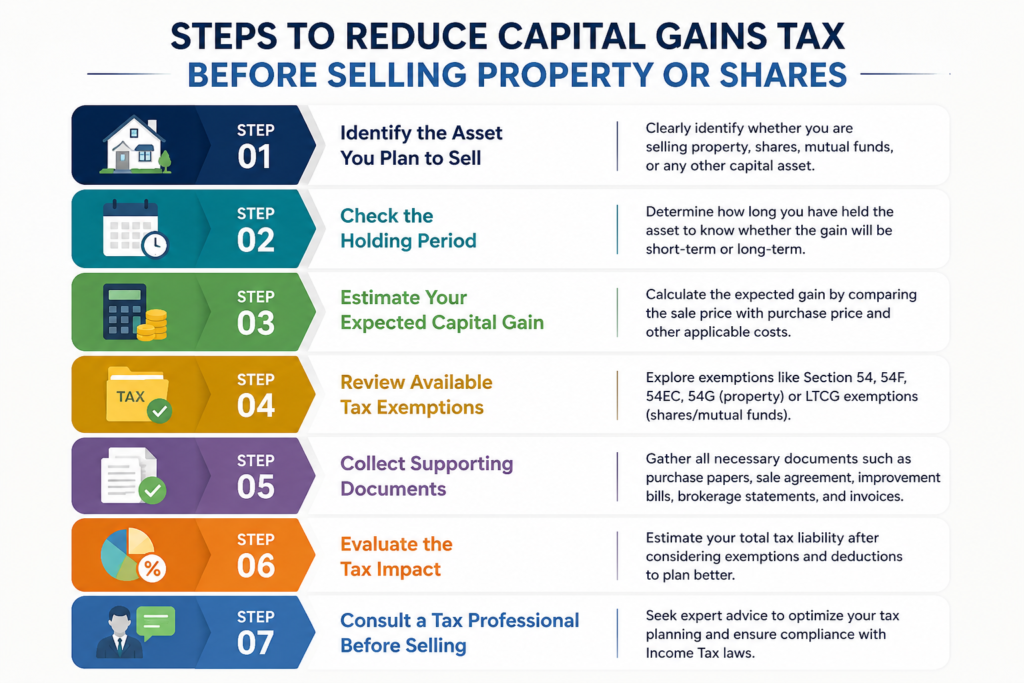
Step 1: Identify the Asset You Plan to Sell
Determine whether you are selling property, shares, mutual funds, gold, or another capital asset, as each has different tax rules.
Step 2: Check the Holding Period
Review how long you have owned the asset to determine whether Short-Term Capital Gains Tax or Long-Term Capital Gains Tax will apply.
Step 3: Estimate Your Expected Capital Gain
Calculate the difference between the purchase price and the expected selling price after considering eligible expenses.
Step 4: Review Available Tax Exemptions
Identify exemptions and reinvestment options available under the Income Tax Act before completing the sale.
Step 5: Collect Supporting Documents
Keep purchase agreements, sale deeds, broker statements, improvement invoices, and payment proofs ready to support your tax calculations.
Step 6: Evaluate the Tax Impact
Estimate the Capital Gains Tax payable and compare different sale timelines to identify the most tax-efficient option.
Step 7: Consult a Tax Professional Before Selling
Professional tax advice can help you structure the transaction efficiently, reduce unnecessary taxes, and ensure complete compliance with current tax laws.
Following these steps before selling property or investments can significantly improve your post-tax returns while reducing compliance risks.
Common Mistakes That Increase Capital Gains Tax Liability
Many taxpayers end up paying more Capital Gains Tax than necessary due to calculation errors, poor documentation, or missed exemptions. Reviewing these common mistakes before selling an asset can help reduce tax liability and ensure compliance.
- Selling an asset without assessing the tax impact.
- Ignoring the applicable holding period.
- Using an incorrect purchase cost for calculations.
- Failing to keep records of improvement expenses.
- Missing eligible Capital Gains Tax exemptions.
- Reporting incorrect capital gains in the Income Tax Return (ITR).
- Waiting until after the sale to plan for taxes.
Avoiding these mistakes can help minimize tax liability, reduce the risk of notices or penalties, and make the tax filing process smoother.
Why Professional Tax Planning Makes a Difference
Capital gains taxation can quickly become complex, particularly when selling multiple properties, inherited assets, or investment portfolios. Professional tax planning helps ensure capital gains are calculated accurately, eligible exemptions are claimed, and all supporting documents are in place before filing.
An experienced tax professional can identify tax-saving opportunities, structure transactions efficiently, prepare accurate documentation, and ensure your Income Tax Return (ITR) is filed correctly. Planning before the sale is completed often reduces tax liability, minimizes the risk of notices or disputes, and helps maximize your post-tax returns.
“Selling property or shares? Reduce your Capital Gains Tax legally with expert tax planning from CAAFT”
Final Thoughts
Selling property or investments is a major financial decision, and the amount you keep ultimately depends on how effectively you plan your taxes before completing the transaction. Understanding the difference between Short-Term Capital Gains Tax and Long-Term Capital Gains Tax, evaluating the tax on property sale, and taking advantage of eligible exemptions can significantly reduce your overall Capital Gains Tax liability.
Rather than waiting until after the sale is completed, review your holding period, calculate potential tax implications, maintain proper documentation, and explore available tax-saving options in advance. A proactive approach not only helps you retain more of your profits but also ensures full compliance with the latest Income Tax regulations.
Frequently Asked Questions
Capital Gains Tax is the tax payable on the profit earned from selling a capital asset, such as property, shares, mutual funds, or other investments. The tax applies only to the gain made on the sale, not the total sale value. The applicable tax depends on the asset type, holding period, and current Income Tax rules.
You can reduce Capital Gains Tax by planning the sale, claiming eligible exemptions, maintaining accurate purchase and improvement records, and evaluating the tax impact before completing the transaction. Professional tax planning can also help identify lawful tax-saving opportunities under the Income Tax Act.
To calculate Capital Gains Tax correctly, you should keep the purchase deed, sale agreement, payment receipts, improvement expense bills, brokerage invoices, and investment statements. These documents help establish the acquisition cost, selling expenses, and eligible deductions while supporting your Income Tax Return (ITR).
Yes. The holding period determines whether your gain is treated as a Short-Term Capital Gain (STCG) or Long-Term Capital Gain (LTCG). Different asset classes have different holding period rules, and the applicable tax rate and available exemptions vary accordingly.
Yes. The Income Tax Act provides several exemptions for eligible taxpayers who satisfy specified conditions, such as reinvesting the gains in qualifying assets. The availability of these exemptions depends on the type of asset sold, the reinvestment made, and compliance with the applicable provisions.
Yes. Estimating your Capital Gains Tax before completing the sale helps you understand the expected tax liability, explore available exemptions, and make informed financial decisions. Early tax planning can also prevent unexpected tax payments and improve post-tax returns.
Capital gains calculations can become complex when multiple assets, inherited property, high-value investments, or exemptions are involved. A tax professional can ensure accurate calculations, identify eligible tax-saving opportunities, maintain proper documentation, and help file your Income Tax Return in compliance with the latest regulations.