
Filing your Income Tax Return (ITR) has become more data-driven than ever. The Income Tax Department now cross-verifies information from employers, banks, mutual funds, stock brokers, property transactions and other financial institutions through automated reporting systems.
According to data shared by the Ministry of Finance, over 8.79 crore Income Tax Returns were filed for AY 2025-26, highlighting the growing importance of accurate documentation and tax compliance. Whether you are a salaried employee, freelancer, consultant, business owner, investor, or retiree, keeping the right documents ready before filing your return can help avoid notices, reduce errors, claim maximum deductions and ensure faster refund processing.
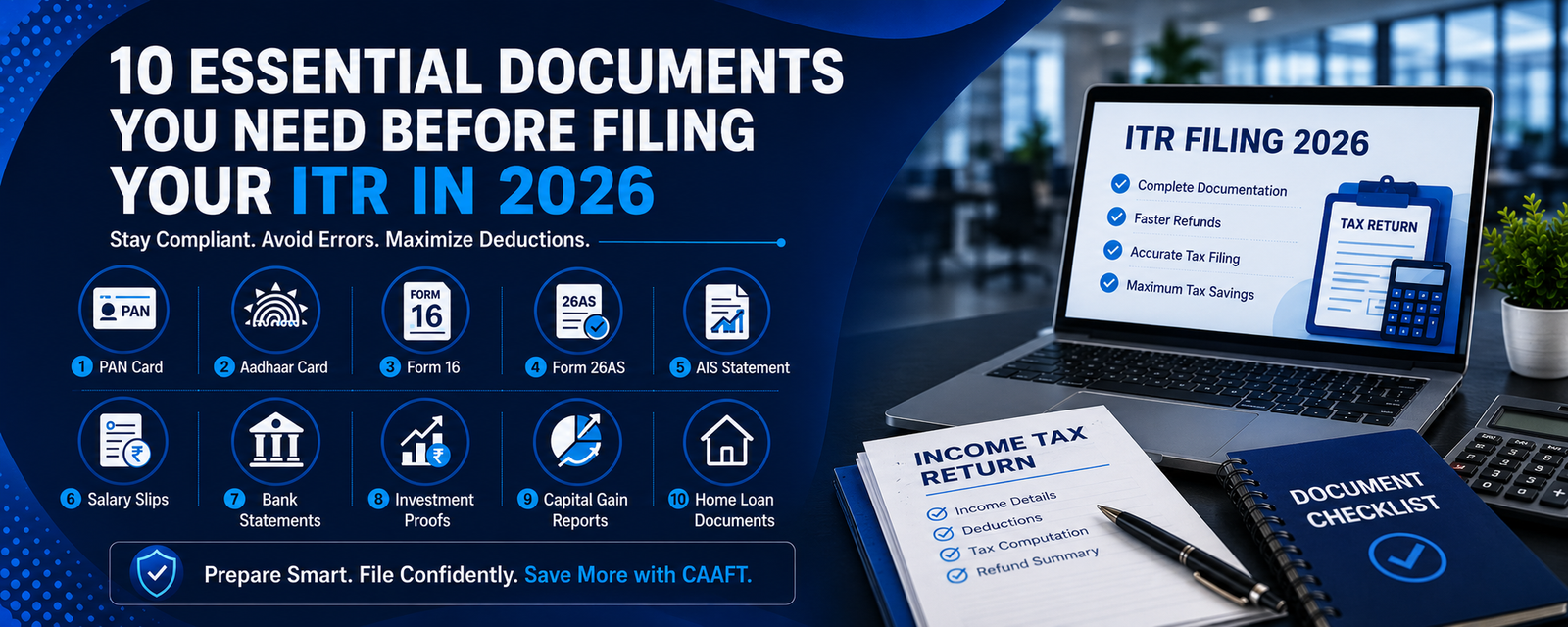
This guide covers the top 10 documents every taxpayer should collect before filing their Income Tax Return in 2026.
Key Takeaways
- Keeping all required tax documents ready before filing significantly reduces ITR errors and notices from the Income Tax Department.
- Form 16, AIS, Form 26AS and bank statements are the most important documents for accurate income reporting.
- Missing investment proofs can result in the loss of eligible deductions under Sections 80C, 80D and other tax-saving provisions.
- Taxpayers with capital gains, rental income, freelance income, or business income require additional supporting documents.
- Reviewing AIS and Form 26AS helps identify income mismatches before filing the return.
- Proper documentation supports effective tax planning and helps maximize legitimate tax-saving opportunities.
- Professional tax planning and income tax filing assistance can improve compliance, optimize deductions and reduce future tax liabilities.
Why Document Preparation Matters Before Filing ITR
Many taxpayers rush to file their returns at the last minute and later discover discrepancies between their declared income and the information available with the Income Tax Department.
Having all documents required for ITR filing ready before submission helps taxpayers:
- Report all income sources accurately
- Claim eligible deductions and tax benefits
- Reduce the risk of tax notices and scrutiny
- Speed up refund processing
- Reconcile AIS and Form 26AS data efficiently
- Maintain complete tax compliance records
Proper documentation is also the foundation of effective tax planning. Taxpayers who organize their financial records throughout the year are usually able to optimize deductions and reduce unnecessary tax burdens through professional tax planning and advisory services.
Having the right documents is only part of successful tax filing – accurate reporting and strategic tax planning can make a significant difference in your tax liability.
“File your Income Tax Return with confidence – get expert tax planning and ITR filing support from CAAFT.“
Quick Checklist: Documents Required for Income Tax Return Filing in 2026
Before filing your Income Tax Return, ensure you have the following documents ready:
- PAN Card
- Aadhaar Card
- Form 16
- Form 26AS
- Annual Information Statement (AIS)
- Salary Slips
- Bank Statements
- Investment and Tax-Saving Proofs
- Capital Gain Statements
- Home Loan and Property Documents
This ITR filing checklist helps taxpayers report income accurately, claim eligible deductions and avoid filing errors.
Top 10 Documents You Need Before Filing Your Income Tax Return in 2026
1. PAN Card
PAN (Permanent Account Number) is one of the most important documents required for income tax return filing in India. It serves as the unique tax identification number used by the Income Tax Department to track tax payments, income reporting, and financial transactions.
Checklist:
- PAN is active and valid
- PAN is linked with Aadhaar
- Name and date of birth match official records
Any mismatch between PAN and Aadhaar details may result in verification failures or delays in processing tax refunds.
2. Aadhaar Card
Aadhaar authentication remains a mandatory requirement for most taxpayers filing income tax returns online. Ensuring your Aadhaar information is correct can prevent filing and verification issues.
Ensure the following before filing:
- Aadhaar is linked to PAN
- Registered mobile number is active
- Personal details are accurate and updated
Proper Aadhaar verification helps complete the e-verification process quickly after filing your return.
3. Form 16 from Employer
For salaried employees, Form 16 is one of the most important income tax documents. It provides a summary of salary income and taxes deducted during the financial year.
Form 16 typically includes:
- Salary income details
- Tax Deducted at Source (TDS)
- Exemptions claimed under various sections
- Professional tax deductions
- Employer contributions and deductions
For taxpayers seeking professional assistance, accurate reporting can be simplified through expert Income Tax Return (ITR) filing services.
4. Form 26AS
Form 26AS is a consolidated tax credit statement that records taxes deducted, collected, and deposited against your PAN. It helps taxpayers verify TDS credits, tax payments, and certain high-value financial transactions before filing their Income Tax Return.
It contains information such as:
- TDS is deducted by employers and banks
- Tax Collected at Source (TCS)
- Advance tax payments
- Self-assessment tax payments
- Specified high-value financial transactions
Before filing your return, compare Form 26AS with your records to identify any discrepancies and avoid future tax notices.
5. Annual Information Statement (AIS)
The Annual Information Statement (AIS) has become one of the most critical documents for income tax filing. It provides a comprehensive view of financial transactions reported to the tax department.
AIS may include details related to:
- Interest income
- Dividend earnings
- Stock and securities transactions
- Mutual fund investments
- Property purchases and sales
- Foreign remittances
- Other reportable financial activities
Reviewing AIS thoroughly helps taxpayers accurately report income and maintain tax compliance.
6. Salary Slips
Monthly salary slips provide a detailed breakdown of earnings and deductions throughout the year. They are particularly useful for reconciling information reported in Form 16.
Salary slips generally include:
- Basic salary
- House Rent Allowance (HRA)
- Special allowances
- Bonuses and incentives
- Provident Fund contributions
- Tax deductions
Keeping all salary slips organized helps identify inconsistencies before filing your return.
7. Bank Statements
Bank statements are among the most frequently overlooked tax filing documents. They help taxpayers identify interest income, rental receipts, business transactions, and other financial activities that must be reported in the Income Tax Return. They provide a complete record of financial transactions during the financial year.
Key details to review include:
- Savings account interest
- Fixed deposit interest income
- Rental income receipts
- Business-related transactions
- Foreign inward remittances
- High-value credits and debits
Accurate reporting of bank-related income helps prevent mismatches with tax department records.
8. Investment and Tax-Saving Proofs
Tax-saving investments and eligible expenses must be supported by proper documentation to claim deductions under various sections of the Income Tax Act.
Common documents include:
Section 80C Investments
- ELSS investment statements
- PPF contribution receipts
- Life insurance premium receipts
- EPF contribution records
- Tax-saving fixed deposit certificates
Section 80D Deductions
- Health insurance premium receipts
Other Eligible Deductions
- NPS contribution statements
- Education loan interest certificates
- Home loan interest certificates
- Donation receipts eligible for tax benefits
Many taxpayers also use professional tax planning and advisory solutions to identify additional tax-saving opportunities before filing.
9. Capital Gain Statements
Taxpayers earning profits from stocks, mutual funds, ETFs, bonds, cryptocurrencies, or property transactions must collect capital gain statements before filing their Income Tax Return. Accurate capital gains reporting is essential for tax compliance and avoiding future notices.
Important documents include:
- Broker transaction statements
- Mutual fund capital gain reports
- Property purchase agreements
- Property sale deeds
- Investment account summaries
Accurate reporting of capital gains is essential because investment transactions are increasingly tracked through regulatory reporting systems.
10. Home Loan and Property Documents
Property owners should maintain all relevant housing and rental-related documents to claim deductions and report income accurately.
Essential documents include:
- Home loan interest certificate
- Principal repayment certificate
- Property tax receipts
- Rental agreements
- Municipal tax payment records
These records help taxpayers claim housing-related tax benefits while ensuring proper disclosure of rental income.
Common Mistakes Taxpayers Make While Filing Returns
Many taxpayers receive notices, refund delays, or tax demands because they fail to maintain the documents required for ITR filing or overlook income reported in AIS and Form 26AS.
Common mistakes include:
- Filing solely based on Form 16
- Ignoring AIS information
- Missing bank interest income
- Forgetting dividend income
- Incorrect capital gain reporting
- Claiming deductions without supporting documents
- Not reconciling Form 26AS with income records
In cases where taxpayers receive scrutiny notices or departmental queries, timely tax assessment and appeal support can help resolve issues efficiently.
How Proper Tax Planning Reduces Your Tax Liability
Collecting documents is not just about compliance – it is also about tax optimization.
Effective tax planning helps taxpayers:
- Maximize deductions under various sections
- Structure investments efficiently
- Reduce taxable income legally
- Plan capital gains strategically
- Optimize old regime vs. new regime selection
Taxpayers who review their financial records regularly can make informed decisions throughout the year rather than scrambling at filing time.
Businesses, professionals, and salaried individuals can benefit from professional Tax Planning & Advisory services to identify tax-saving opportunities while remaining fully compliant with current regulations.
Similarly, expert Income Tax Return (ITR) filing support helps ensure accurate reporting, timely filing, and proper documentation, reducing the risk of notices and penalties.
Final Income Tax Return Filing Checklist for 2026
If you are unsure whether all income sources, deductions, and disclosures have been reported correctly, consulting professionals for ITR filing assistance can help avoid costly filing errors.
Before clicking “Submit,” verify that:
- PAN and Aadhaar are linked
- Form 16 data matches salary records
- Form 26AS has been reviewed
- AIS information has been reconciled
- Bank interest income is included
- Capital gains are reported correctly
- Eligible deductions are claimed
- Home loan benefits are calculated accurately
- Supporting documents are available for future reference
- Return is verified after filing
Conclusion
Filing your Income Tax Return accurately begins with proper documentation. Keeping essential records such as PAN, Aadhaar, Form 16, Form 26AS, AIS, bank statements, investment proofs, capital gain reports, and home loan documents readily available can help ensure complete income disclosure, accurate deduction claims, and smooth tax compliance. A well-prepared approach not only minimizes the risk of errors, notices, and refund delays but also enables taxpayers to make informed tax-saving decisions. By organizing these documents in advance and reviewing them carefully before filing, taxpayers can complete their ITR filing process with greater confidence, accuracy and compliance.
Frequently Asked Questions
There is no single document that covers all income sources. While Form 16 is essential for salaried employees, taxpayers should also review Form 26AS, AIS, bank statements, and investment records to ensure complete and accurate reporting.
No. Form 16 only contains salary-related information provided by your employer. Additional income such as bank interest, dividends, capital gains, rental income, and freelance earnings may not be reflected and must be reported separately.
AIS contains financial information reported by various institutions to the Income Tax Department. Reviewing AIS helps identify unreported income, avoid mismatches, and reduce the likelihood of receiving tax notices.
Unreported interest income can create discrepancies between your tax return and department records. This may lead to notices, reassessment, additional tax liability, and interest charges on unpaid taxes.
Most deductions are unavailable under the new tax regime. However, taxpayers comparing the old and new regimes should maintain investment proofs to determine which regime offers the greater tax benefit.
Taxpayers should keep broker statements, mutual fund reports, purchase records, sale records, and property transaction documents. These records help calculate gains accurately and support disclosures in the tax return.
Yes. Freelancers and business owners must maintain invoices, expense records, bank statements, profit and loss accounts, GST records, and other financial documents to report income and claim eligible business deductions accurately.