

GST registration is mandatory for many businesses operating in India. However, there are situations where a business may no longer require GST registration due to business closure, low turnover, restructuring, transfer of ownership, or voluntary deregistration.
In such cases, taxpayers must apply for GST registration cancellation through the GST portal to avoid unnecessary compliance requirements, late fees, penalties, and continuous return filing obligations.Cancelling GST registration is not simply about stopping business activities. Businesses must complete the proper GST cancellation procedure, settle pending liabilities, reverse applicable Input Tax Credit (ITC), and file the final GST return (GSTR-10).
This comprehensive guide explains:
- What GST cancellation means
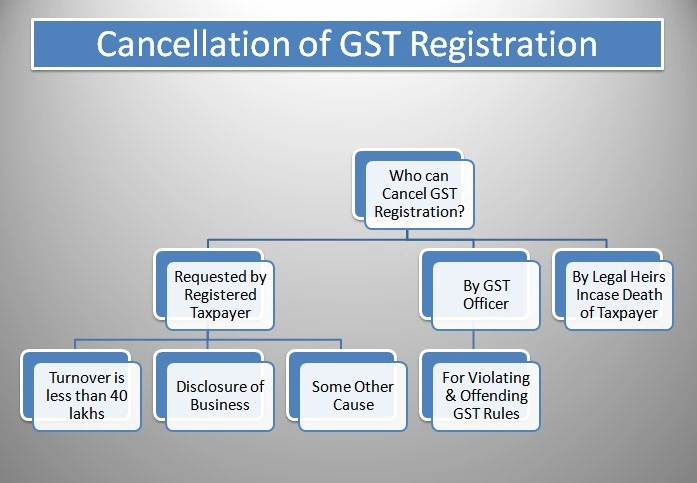
- Who can cancel GST registration
- Reasons for GSTIN cancellation
- GST cancellation rules
- Documents required
- Step-by-step GST cancellation process
- GSTR-10 filing requirements
- Common mistakes to avoid
- GST cancellation FAQs
GST Cancellation Quick Summary
| Particulars | Details |
| Purpose | Cancellation of GST registration |
| Governed By | CGST Act & GST Rules |
| Applicable To | Registered taxpayers |
| Main Form | GST REG-16 |
| Cancellation Order | GST REG-19 |
| Final Return | GSTR-10 |
| Filed Through | GST Portal |
| Initiated By | Taxpayer or GST Department |
| Main Reasons | Business closure, turnover below threshold, business transfer, restructuring |
| Time Limit for Final Return | Within 3 months |
What is GST Cancellation?
GST cancellation refers to the legal process of deactivating a GST registration (GSTIN) when a business no longer needs to remain registered under GST laws. After cancellation, the business cannot collect GST, issue GST invoices, or claim Input Tax Credit (ITC).Additionally, taxpayers no longer need to file regular GST returns after the cancellation becomes effective. However, businesses must still file the final return in GSTR-10 within the prescribed timeline.
In simple terms, GST cancellation ends the taxpayer’s legal GST compliance responsibilities unless a new registration is obtained later.
Why is GST Registration Cancellation Important?
Proper GST cancellation services help businesses avoid unnecessary compliance burdens and legal complications. Moreover, it prevents taxpayers from receiving notices for non-filing of GST returns after business operations stop.
Benefits of GST Cancellation
- Avoids continuous GST return filing
- Prevents late fees and penalties
- Reduces administrative and compliance burden
- Ensures proper legal closure
- Helps avoid GST department notices
- Simplifies business restructuring processes
Who Should Read This GST Cancellation Guide?
- Small business owners
- Startups
- Proprietors
- Partnership firms
- Freelancers and consultants
- E-commerce sellers
- Chartered accountants
- Businesses undergoing mergers or restructuring
- Taxpayers planning business closure
What are the Reasons for GST Registration Cancellation?
Businesses may apply for GST cancellation for several valid reasons under GST law.
1. Permanent Closure of Business
Businesses should cancel GST registration when they permanently stop operations. Otherwise, they may continue receiving GST compliance notices and return filing obligations.
2. Turnover Falls Below GST Threshold Limit
Additionally, businesses whose annual turnover falls below the mandatory GST registration threshold may apply for cancellation. This helps reduce unnecessary compliance costs and filing responsibilities.
3. Transfer, Merger, or Sale of Business
Businesses may also require GST cancellation when ownership changes due to transfer, merger, inheritance, or sale.
Example:
A father transfers his manufacturing business to his son. In this situation, the existing GST registration becomes invalid, and the new owner must obtain a fresh GSTIN.
4. Change in Business Constitution
Businesses often need a new GST registration after changing their legal structure.
Common Examples
- Proprietorship converted into partnership
- Partnership converted into company
- LLP conversion
- Private limited company restructuring
5. Business Providing Only Exempt Supplies
If a business exclusively deals in GST-exempt goods or services, GST registration may no longer be required.
6. Voluntary GST Registration No Longer Required
Some businesses voluntarily obtain GST registration to claim ITC or work with larger clients.If these benefits are no longer necessary, GST cancellation can be requested.
7. Reducing GST Compliance Burden
Businesses with minimal operations may find GST compliance expensive and time-consuming.Cancelling GST registration helps reduce filing obligations and administrative work.
Types of GST Cancellation
GST cancellation can be initiated either by the taxpayer or by the GST department.
Voluntary GST Cancellation
Voluntary GST cancellation allows registered taxpayers to cancel their GST registration when it is no longer necessary. Businesses commonly choose this option after permanent closure, operational discontinuation, or reduced turnover below the GST threshold limit.
Moreover, taxpayers may voluntarily cancel GST registration after changing the business constitution or restructuring operations.
When Can Businesses Apply for Voluntary GST Cancellation?
Businesses may apply for voluntary GST cancellation in situations such as:
- Permanent business closure
- Business discontinuation
- Turnover below threshold limit
- Conversion of business structure
- Transfer of business ownership
- Reduced business activities
Benefits of Voluntary GST Cancellation
Voluntary cancellation offers several advantages:
- Reduces compliance costs
- Eliminates monthly return filing
- Prevents future penalties
- Simplifies legal closure procedures
- Avoids unnecessary GST notices
Department-Initiated GST Cancellation
The GST department can cancel a taxpayer’s registration when serious non-compliance or fraudulent activities occur.
Reasons Why the GST Department Cancels Registration
The department may cancel GST registration for reasons such as:
- Continuous non-filing of GST returns
- Fake invoicing activities
- Wrongful ITC claims
- Fraudulent registration
- Business not operating from the registered address
- Violation of GST provisions
Show-Cause Notice Before Cancellation
Before cancellation, the GST department usually issues a show-cause notice requesting clarification from the taxpayer. The taxpayer must respond within the specified timeline.
However, if the taxpayer fails to provide a satisfactory response, the department may proceed with cancellation.
Documents Required for GST Cancellation
- GST registration certificate
- PAN card
- Aadhaar of authorized signatory
- Proof of business closure
- Transfer or merger agreement
- Stock details and capital goods statement
- ITC reversal details
- Latest GST return acknowledgment
- Payment proof for pending liabilities
Accurate documentation helps businesses avoid delays, notices, and rejection.
How to Cancel GST Registration Online (Step-by-Step Process)
Step 1: Login to GST Portal
Visit the GST portal and log in using your GST credentials.
Step 2: Select GST Cancellation Application
Navigate to: Services → Registration → Application for Cancellation of Registration
Step 3: Choose Reason for GST Cancellation
- Business closure
- Turnover below threshold
- Transfer of business
- Change in constitution
- Voluntary cancellation
Step 4: Enter Required GST Cancellation Details
- Date of business closure
- Stock and capital goods details
- ITC reversal amount
- Outstanding tax liabilities
“Accurate details help avoid rejection or notices.”
Step 5: Upload Supporting Documents
Attach the required supporting documents based on the cancellation reason.
Step 6: Verify and Submit Application
- DSC (Digital Signature Certificate)
- E-sign
- OTP verification
After submission, an Application Reference Number (ARN) is generated for tracking.
Step 7: GST Officer Review & Approval
Finally, the GST officer reviews the application and supporting documents. If everything is correct, the officer issues Form GST REG-19 confirming cancellation approval..
Common Mistakes to Avoid During GST Cancellation
Many GST cancellation applications are delayed due to avoidable errors.
- Applying without filing pending returns
- Incorrect stock declaration
- Wrong ITC reversal calculation
- Uploading incomplete documents
- Ignoring GST department notices
- Missing GSTR-10 filing
- Incorrect business closure date
“Preparing documents and compliance details in advance helps ensure faster approval.”
GST Cancellation vs GST Suspension
| Basis | GST Cancellation | GST Suspension |
| Meaning | Permanent closure of GST registration | Temporary suspension |
| GST Return Filing | Not required after cancellation | Suspended temporarily |
| GSTIN Status | Deactivated permanently | Temporarily inactive |
| ITC Claim | Not allowed | Restricted during suspension |
Can GST Cancellation Be Revoked?
Yes. Taxpayers may apply for revocation if the GST department cancels their registration under eligible circumstances.
However, businesses must usually submit the revocation application within the prescribed time limit after receiving the cancellation order. Additionally, taxpayers must complete pending compliance requirements before seeking revocation approval.
Latest GST Cancellation Updates for 2026
- Increased scrutiny on inactive GST registrations
- AI-based GST compliance monitoring
- Faster GST cancellation verification process
- Improved GST portal automation
- Enhanced mismatch detection for ITC reversal
Businesses should regularly monitor GST notifications and compliance updates.
“Need help with GST registration cancellation? Contact our GST experts for quick and hassle-free assistance.”
Conclusion
Understanding the GST registration cancellation process helps businesses avoid penalties, reduce compliance burdens, stop unnecessary GST return filing, and ensure smooth legal closure. By filing pending returns, submitting accurate details, reversing applicable ITC, and filing GSTR-10 on time, businesses can complete the process smoothly and remain GST compliant.
Frequently Asked Questions
A business can apply for GST cancellation if it has closed operations, transferred ownership, merged with another entity, changed its constitution, or is no longer required to be registered under GST. Timely cancellation helps avoid unnecessary return filing, penalties, and compliance obligations.
Businesses generally need their GST registration details, PAN, Aadhaar of the authorized signatory, proof of business closure or transfer, stock details, ITC reversal information, and records of pending tax liabilities. Complete documentation helps ensure faster approval and reduces the chances of application rejection.
Yes. Most taxpayers whose GST registration has been cancelled are required to file GSTR-10, the Final Return, within the prescribed time. Filing GSTR-10 completes the GST cancellation process and helps avoid additional notices or penalties.
If you stop filing GST returns without cancelling your registration, the GST department may issue notices, levy late fees, charge interest, or initiate cancellation proceedings. Properly cancelling your GST registration helps avoid ongoing compliance issues and legal complications.
Yes. If the GST registration is cancelled by the department under eligible circumstances, businesses may apply for revocation within the prescribed time after completing pending compliance requirements. Professional assistance can improve the chances of successful restoration.
The GST cancellation process generally takes around 15 to 30 days, depending on document verification, pending return status, and approval by the GST officer. Filing accurate information and clearing all liabilities can help speed up the process.
CAAFT provides end-to-end GST cancellation services, including eligibility assessment, GST REG-16 filing, pending return compliance, ITC reversal, GSTR-10 filing, and support throughout the approval process. Experienced GST professionals help businesses complete cancellation smoothly while remaining fully compliant with GST regulations.